
RTO and RPO in Disaster Recovery
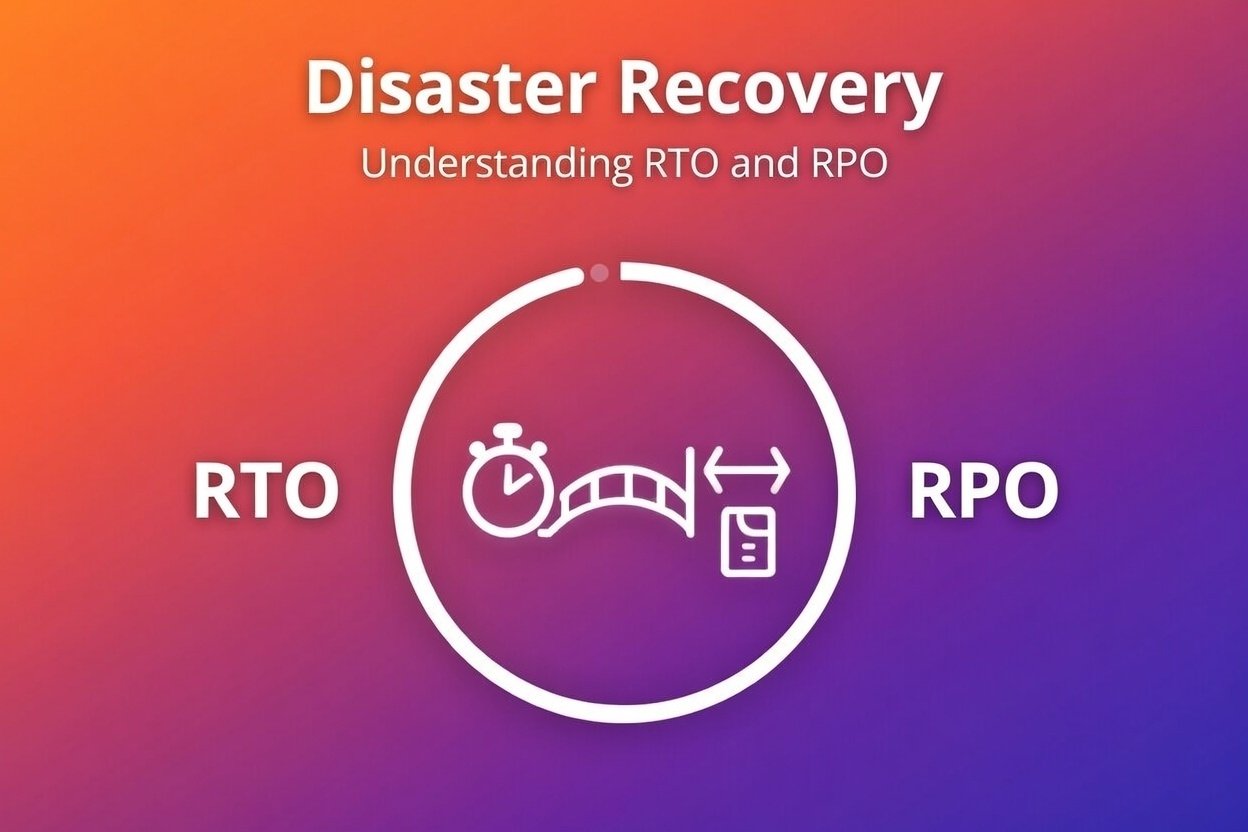
When disaster strikes - be it a cyberattack, hardware failure, or natural event - your organisation’s ability to recover quickly and limit data loss can mean the difference between a minor hiccup and a major crisis. Two core concepts guide this process: Recovery Time Objective (RTO) and Recovery Point Objective (RPO). By defining how long you can afford systems to be offline (RTO) and how much data you can risk losing (RPO), you shape a disaster recovery strategy that balances operational continuity with budget and compliance requirements.
In Australia, frameworks like the Australian Cyber Security Centre (ACSC) Essential Eight encourage robust backup and rapid restoration methods, while local guidelines - such as the Australian Privacy Principles - highlight data handling obligations if personal information is lost. This article explores RTO and RPO in disaster recovery - why they matter, how to determine them, and how they integrate with broader local best practices. Whether you’re a small firm on the Central Coast (NSW) or a larger enterprise, setting clear RTO and RPO targets is crucial to ensure your DR solutions match the reality of your business and compliance needs.
Understanding RTO (Recovery Time Objective)
1. Definition
Recovery Time Objective is the maximum acceptable time your systems or processes can be offline before the impact (financial, reputational, or legal) becomes too great.
Example: If your e-commerce site’s RTO is 4 hours, it means you must restore that site within 4 hours of a disruption to avoid unacceptable damage.
2. Factors Influencing RTO
Business Impact Analysis (BIA): Identifies which applications are mission-critical. A front-end sales system might require a shorter RTO than a marketing archives database.
Budget: Faster recovery typically requires more advanced solutions (real-time replication, high-availability clusters), which are more expensive.
Compliance or Service Level Agreements (SLAs): Some local or contractual obligations might demand minimal downtime, especially if you handle sensitive data or provide essential services.
3. Examples of RTO Approaches
Hot Site Failover: Near-instant or sub-hour RTO, typically used by financial services or critical operations.
Warm Site: May allow a few hours to restore from partial replication or backups.
Cold Site: Accepts longer downtime (days) if cost is a bigger concern and immediate continuity isn’t essential.
Understanding RPO (Recovery Point Objective)
1. Definition
Recovery Point Objective is the maximum amount of data loss (in time) your organisation can tolerate. If RPO is 2 hours, losing two hours of transaction or operational data is deemed acceptable in a worst-case scenario.
2. Factors Influencing RPO
Data Criticality: Highly transactional systems (like point-of-sale) need near-continuous data protection to avoid significant loss. Archival systems can afford bigger RPO windows.
Backup Frequency: More frequent or real-time backups lower RPO but increase storage, bandwidth, and management overhead.
Compliance or Privacy: If personal data is involved, Australian guidelines emphasise tight control over data integrity. Extended data loss might breach local obligations.
3. Examples of RPO Approaches
Real-Time Replication: Near-zero RPO, often for financial transaction databases.
Hourly or Daily Incremental Backups: Suited to less critical data, accepting up to 24 hours of potential loss.
Event-Based Snapshots: Triggered by major updates or end-of-day processes, balancing data volume with the business’s tolerance for partial loss.
Why RTO and RPO Matter for Australian Businesses
Business Continuity
Every hour of downtime or lost data can translate into lost revenue, frustrated customers, or compliance breaches - particularly relevant in e-commerce or service-heavy industries.
Compliance and Trust
Local laws, such as the Australian Privacy Principles (APPs), require secure handling of personal data. If data is lost or unavailable, it may trigger breach notifications or investigations.
Local Threat Landscape
Organisations face storms, bushfires, and floods, or digital threats like ransomware. Setting clear RTO/RPO helps ensure your Disaster Recovery solutions withstand these diverse local hazards.
Cost-Benefit Balance
Achieving near-zero data loss or sub-hour RTO can be expensive (requiring real-time replication, additional data centre capacity). Australian SMEs often choose a middle ground that suits budget constraints while adhering to essential security guidelines.
Setting Your RTO and RPO
1. Business Impact Analysis (BIA)
Why: Identifies financial or operational losses per hour of downtime or data inaccuracy, guiding you to realistic RTO/RPO targets.
How: Involve stakeholders across finance, operations, IT. Prioritise critical apps first.
2. Tiered Recovery
What: Group systems by criticality - tier 1 (must be restored ASAP), tier 2 (restored within a few hours), tier 3 (can wait days).
Outcome: Each tier has distinct RTO/RPO, ensuring resources go where they’re needed most.
3. Technical Feasibility
Why: Achieving sub-hour RTO might require failover clusters or cloud-based DR replication, which can be costly.
Approach: Compare feasible solutions against your maximum downtime/data loss tolerances, factoring in local compliance and essential apps.
Matching Solutions to RTO and RPO Goals
1. On-Premise Backups with Offsite Storage
RPO/RTO Fit: Medium to high RPO (e.g., daily or weekly backups) and moderate RTO (several hours or more).
Use Case: Smaller businesses or less time-sensitive systems where losing a day’s data is tolerable.
2. Cloud Replication / DRaaS
RPO/RTO Fit: Near real-time replication can enable sub-hour RPO and RTO.
Use Case: Critical workloads needing minimal downtime and data loss, with budget to sustain monthly replication costs.
3. Warm Standby
RPO/RTO Fit: Hours of downtime and small data loss.
Use Case: Balanced approach - partial replication with some data typically re-synced upon failover.
4. Hot Site
RPO/RTO Fit: Near-zero downtime or data loss, highest cost.
Use Case: Essential services (like finance or healthcare) with severe penalties for outages or data gaps.
Testing and Maintaining RTO/RPO Targets
1. Regular DR Drills
Why: Confirm actual recovery times match your theoretical RTO, verifying backups and failover processes.
How: Perform at least annual tests, partial or full. Record how long each system takes to restore, measure data loss.
2. Continuous Monitoring
What: Checking logs for successful backups, replication lag, or missed snapshots.
Why: If backups skip or replication lags hours behind, your RPO worsens - spotting issues early prevents nasty surprises.
3. Runbook Updates
What: Evolving DR documentation as infrastructure changes or new apps appear.
Why: RTO/RPO assumptions shift if newly introduced systems are more critical or generate more data.
The Role of a Managed IT Services Provider
A Managed IT Services provider helps:
Conduct BIA: Identifying RTO/RPO baselines for each department or application.
Design DR Solutions: Proposing on-prem, cloud, or hybrid approaches that align with Australian compliance needs while meeting RTO/RPO.
Implementation: Setting up backups, replication, or DRaaS.
Regular Testing: Coordinating failover drills, verifying data restore within RPO, measuring downtime to ensure RTO compliance.
Continuous Refinement: Adjusting as business grows - if new apps require faster recovery, or to keep costs under control for less critical assets.
Check How to Choose a Managed IT Provider for guidance in selecting an MSP that can support these local requirements.
Evaluating RTO/RPO Effectiveness
Referring to Evaluating Managed IT Performance, track:
Actual Recovery Time vs. RTO
Are you hitting the targeted window in tests or real incidents? Gaps need deeper DR plan refinement.
Actual Data Loss vs. RPO
If you aimed for 1 hour’s data max loss, do test or real incidents confirm that margin?
DR Drill Frequency and Success
More frequent testing fosters higher confidence, fewer surprises, and consistent RTO/RPO achievements.
Staff Readiness
Are teams comfortable with DR steps? Long confusion or errors hint at insufficient training or runbook clarity.
Business Feedback
After a real incident, do stakeholders find the downtime/data loss acceptable or do they demand improvements?
Why Partner with Zelrose IT?

At Zelrose IT, we incorporate RTO and RPO considerations into tailored disaster recovery solutions for Australian businesses. Our approach:
Business Impact Analysis: Pinpointing essential systems, determining downtime/data loss tolerances, then matching them to feasible DR technologies.
DR Solution Design: On-prem backups, cloud replication, or DRaaS aligned with local data residency needs and compliance.
Implementation & Automation: Setting backup schedules or replication routines, ensuring each environment meets your RTO/RPO goals.
Ongoing Testing: Running test recoveries, verifying logs, adjusting runbooks as your infrastructure evolves.
24/7 Support: If a major incident happens, our team rapidly initiates failover, guiding swift system restoration.
Need DR solutions that hit your RTO/RPO while staying cost-effective? Contact us - we’ll craft a plan that minimises downtime, secures data, and meets local standards.
RTO (Recovery Time Objective) and RPO (Recovery Point Objective) serve as the guiding metrics when designing a disaster recovery strategy - defining how quickly you must restore operations and how much data loss you can tolerate, respectively. By carefully calibrating RTO and RPO for each system or application, you establish realistic recovery priorities that balance risk, cost, and operational impact. Whether employing simple offsite backups or advanced real-time replication, these objectives shape the technical and financial investment required.
For Australian organisations, local conditions - like the ACSC Essential Eight guidelines, compliance obligations (e.g., data privacy, APRA for finance) - influence acceptable downtime and data loss. Regular DR testing ensures your actual recovery times match the plan, giving both technical teams and stakeholders confidence in your resilience. Engaging a Managed IT Services provider skilled in Australian frameworks can expedite solution design, oversee updates, and coordinate failover if a crisis arises. Ultimately, clear RTO/RPO targets help you protect vital data, maintain customer trust, and swiftly resume operations whenever disruptions occur.
Ready to define RTO and RPO aligned with your business goals?
Reach out to Zelrose IT - we’ll evaluate your environment, craft DR solutions hitting those targets, and ensure seamless testing to validate real-world recovery.