
Trends in Cybersecurity Management
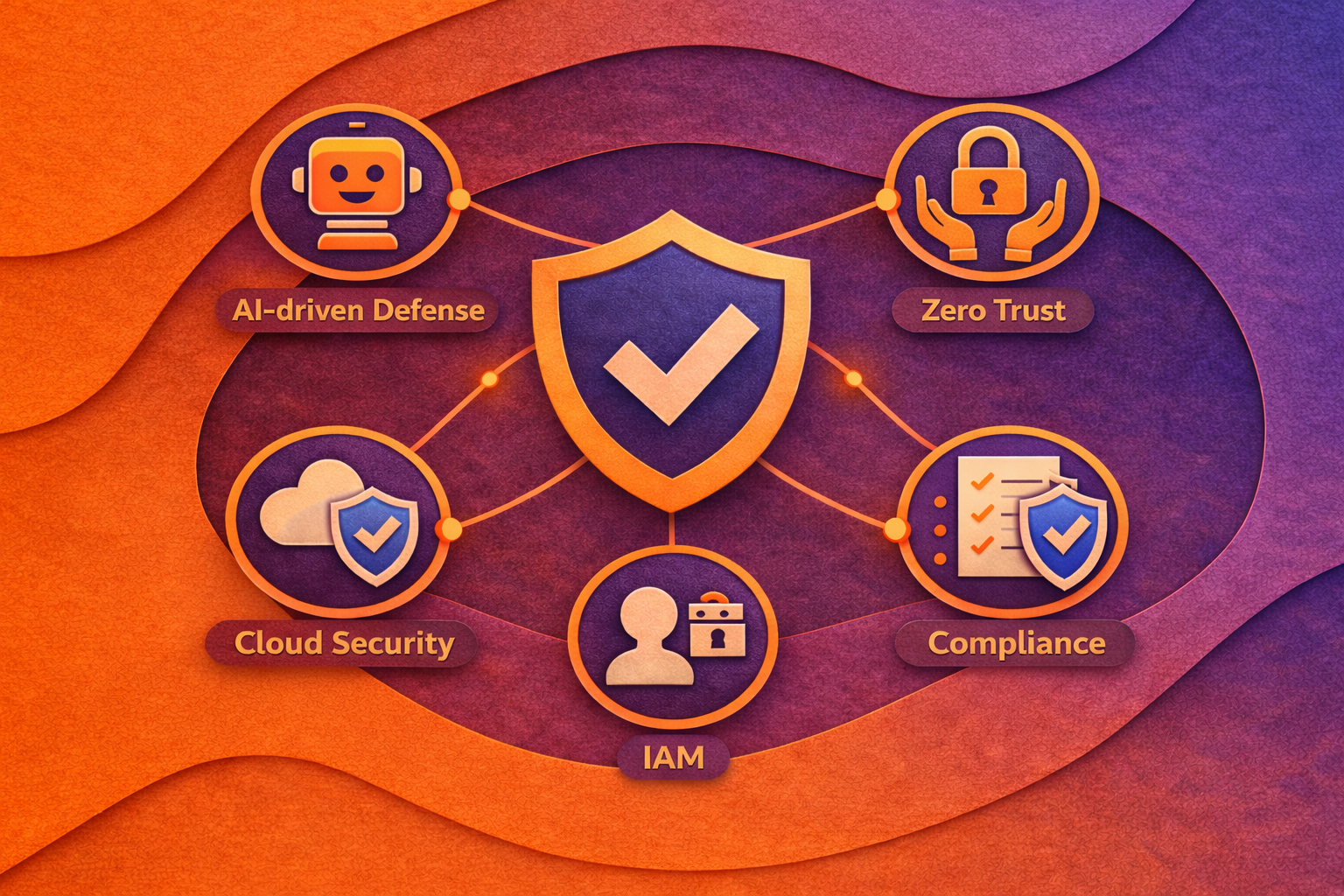
Cybersecurity is a rapidly evolving field, with new threats, technologies, and methodologies appearing almost daily. Australian organisations, in particular, must stay aligned not only with global best practices but also with local guidelines and frameworks - like the Essential Eight or the Australian Privacy Principles (APPs) - to protect sensitive data and maintain trust. As businesses embrace remote work, cloud services, and advanced analytics, cybersecurity management must adapt accordingly.
In this article, we’ll explore current trends in cybersecurity management - how they’re reshaping defence strategies, what key technologies are on the rise, and how Australian standards fit into the picture. We’ll also reference earlier topics - like Vulnerability Management Best Practices and Cybersecurity in Cloud Environments - to show how these trends build on a robust security foundation. Whether you’re a small local office on the Central Coast (NSW) or a multi-site enterprise, staying on top of these trends can help you proactively address emerging threats and meet local compliance needs.
Shift Toward Zero Trust Security
1. Beyond the Perimeter
Trend: Traditional perimeter defences no longer suffice in a world where employees connect from anywhere, using personal or cloud-based devices.
Outcome: Australian security guidelines (like ACSC’s Essentials) increasingly emphasise user and device verification at each step, not just once at the network edge.
2. Micro-Segmentation
Why: Compartmentalising resources ensures a compromise in one department or cloud segment doesn’t automatically expose everything else.
Benefit: Contains breaches, aligning with Australian recommendations for restricting admin privileges and controlling system macros.
Growing Adoption of AI-Driven Security
1. AI for Threat Detection
Trend: Machine learning models analyse network traffic, logs, and user behaviour to spot anomalies in real time, catching stealthy attacks that rule-based systems might miss.
Why: Modern threats evolve quickly - AI-based detection adapts faster than static signatures or manual processes.
2. Australian Use Cases
Examples: Financial institutions using AI to detect fraudulent transactions or malicious insider behaviour.
Outcome: Quicker detection, reduced human alert fatigue, and alignment with “early detection” aspects of local frameworks like the Essential Eight’s logging and restricted privileges.
Cloud and Hybrid Security Expansion
1. Shared Responsibility Realisation
Trend: As more Australian organisations adopt multi-cloud or hybrid solutions, they realise cloud providers secure only certain layers. Customers must secure OS, applications, and data configurations.
Impact: Misconfigurations remain a top cause of breaches - hence the push for continuous posture checks.
2. DevSecOps Integration
Why: Rapid deployments demand security checks early in the pipeline, shifting left on vulnerability scans and compliance checks.
Outcome: CI/CD processes incorporate scanning tools, ensuring patches and secure configs before hitting production - matching ACSC’s emphasis on patch application and strong configurations.
Rise of Managed Detection and Response (MDR)
1. 24/7 Threat Hunting
Trend: Overwhelmed internal teams outsource round-the-clock monitoring to Managed Threat Detection and Response providers with skilled analysts and advanced SIEM/EDR solutions.
Why: Retaining in-house SOC staff can be costly, while MDR ensures immediate escalation of anomalies - complementing local incident response guidelines.
2. Integration with Local Compliance
Outcome: MDR providers often factor in Australian data handling laws (like APPs), ensuring logs remain in Australian data centres if required, and tailoring incident workflows to local breach notification rules.
Heightened Focus on Endpoint and Mobile Security
1. Remote Work Normalised
Trend: With employees working from home or using personal devices, endpoint-centric security (EDR, mobile device management) becomes indispensable.
Why: Each device outside the corporate firewall is a potential entry point for attackers, emphasising the need for endpoint security solutions.
2. Zero-Day Exploits on Rise
Outcome: Attackers specifically target unpatched mobile OS vulnerabilities or remote endpoints. Continuous patching and vulnerability management cycles are essential to keep pace.

Evolving Threats and Targeted Attacks
1. Ransomware Continues
Trend: Attackers deploy multi-extortion tactics - encrypting data, threatening to leak it, or attacking customers. Australia is not immune, with numerous small and large businesses affected.
Response: Greater emphasis on offline backups, incident response plans, and tabletop exercises focusing on ransomware scenarios.
2. Supply Chain Risks
Trend: Adversaries insert malicious code in software updates or third-party components, quietly infecting multiple downstream customers.
Approach: Vet suppliers, adopt code-signing validations, and monitor software dependencies to comply with local security expectations for third-party risk management.
Staff Training and Culture Remain Critical
1. Continuous Phishing Simulations
Trend: Organisations run monthly or quarterly simulated phishing campaigns, especially vital with Australian staff often targeted by local-themed lures (e.g., ATO, MyGov).
Outcome: Lower click-through rates, timely reporting of suspicious emails, alignment with the Essential Eight’s user education aspect.
2. Security Champions
Concept: Embedding “security ambassadors” in each department fosters awareness and rapid detection of anomalies.
Benefit: Beyond formal policies, peer-level advocates encourage best practices, bridging technical and non-technical roles.
Automation and Orchestration
1. Security Orchestration, Automation, and Response (SOAR)
Why: Repetitive tasks - like blocking known malicious IPs or quarantining compromised endpoints - can be automated, freeing analysts for advanced threats.
Outcome: Faster incident containment, consistent responses, and less staff burnout.
2. IaC (Infrastructure as Code) for Security
Trend: Using scripts (Terraform, Ansible) to define and enforce secure configurations across cloud or on-prem, automatically applying patches or firewall rules.
Benefit: Consistency, easier rollback, and alignment with vulnerability scanning for quick fixes.
How a Managed IT Services Provider Supports These Trends
A Managed IT Services partner can help by:
Assessing Readiness: Advising on zero trust designs, applying the Essential Eight, or enabling advanced EDR solutions.
Implementing Automation: Setting up SOAR workflows, integrating incident response steps, managing DevSecOps pipelines.
24/7 Threat Detection: Operating a local or outsourced SOC, meeting real-time demands for Australian businesses.
Regular Training and Phishing Simulations: Rolling out staff education to keep pace with emerging social engineering tactics.
Roadmapping Upgrades: Tracking evolving threats or Australian regulations, recommending when to upgrade encryption, patch policies, or adopt new compliance measures.
For advice on selecting an MSP well-versed in local compliance and security needs, see How to Choose a Managed IT Provider.
Evaluating Evolving Cybersecurity Management
Tying into Evaluating Managed IT Performance, measure:
Coverage of Zero Trust
Are critical applications and data segments micro-segmented? Is each user/device continuously verified?
Automation Success
Percentage of routine responses (phishing blocks, patch deployments) automated, and the reduction in manual overhead.
SOC or MDR Effectiveness
Mean time to detect (MTTD) and respond (MTTR) to incidents dropping over time as advanced tools or managed services take hold.
Staff Training Impact
Reduction in successful phishing attempts, an increase in reported suspicious emails. A key sign of cultural maturity.
Alignment with Essential Eight
Are you climbing maturity levels across the eight strategies? Tracking progress helps maintain local best practice compliance.

Why Partner with Zelrose IT?
At Zelrose IT, we track cybersecurity trends specific to Australian needs - focusing on local compliance, the Essential Eight, and advanced technologies. Our offerings:
Holistic Security Roadmaps: Mapping new techniques (zero trust, AI-based detection) to your unique environment and risk profile.
Managed Services: Handling day-to-day tasks (patching, threat detection, staff training) so you stay agile without sacrificing security.
Integration Expertise: Aligning cloud expansions with Australian data residency needs, enforcing micro-segmentation or NAC for remote sites.
Continuous Optimisation: Updating frameworks, refining runbooks, and responding to new ACSC advisories or local threat intel.
Looking to stay ahead of modern threat actors while aligning with Australian standards? Contact us - we’ll craft forward-thinking security solutions that evolve with each new trend, protecting your business for the long haul.
Cybersecurity management never stands still - trends shift as attackers refine tactics, new cloud or AI technologies emerge, and local Australian guidelines (like the Essential Eight) expand. Adopting zero trust, leveraging AI-driven detection, and automating routine tasks all reflect the sector’s move toward proactive, agile security. Meanwhile, staff training and robust incident response remain cornerstones, ensuring humans and systems jointly shield critical data.
For Australian organisations, these trends must align with national compliance expectations, from data privacy rules to recommended ACSC strategies. Engaging a Managed IT Services provider adept in local best practices can ease the complexity - offering 24/7 coverage, integrated solutions, and a pipeline of continuous updates to match evolving threats. Ultimately, embracing these trends helps your business stay resilient, compliant, and competitive amid rising cyber risks.
Ready to adopt the latest cybersecurity strategies?
Get in touch with Zelrose IT - we’ll integrate cutting-edge defences, advanced threat hunting, and local compliance knowledge into a unified, future-proof cybersecurity program for your organisation.