
AI and Automation in Cybersecurity
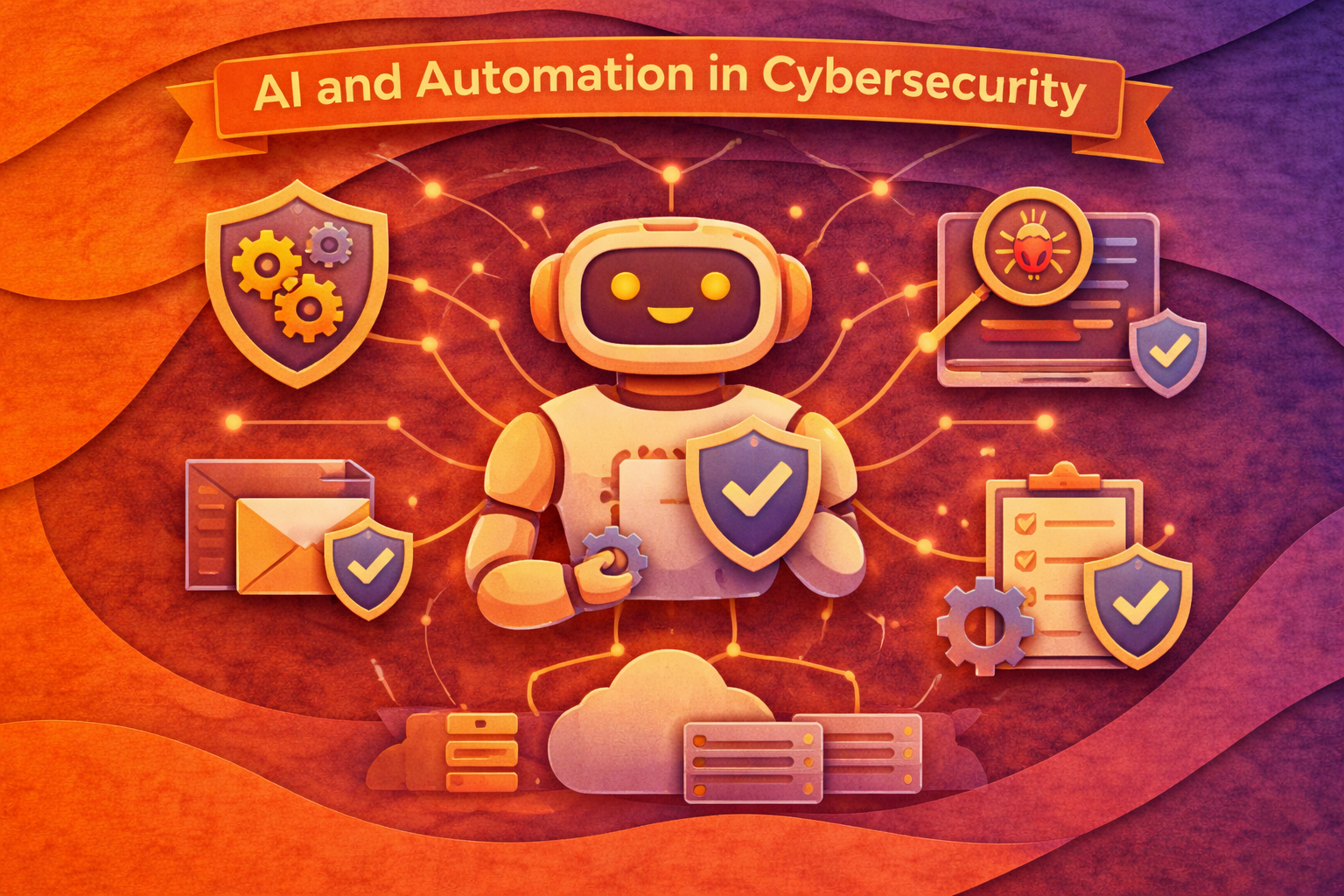
As cyber threats escalate in sophistication, Australian businesses must respond with equally advanced techniques - and AI (artificial intelligence) stands at the forefront of these efforts. By analysing massive data sets to detect subtle anomalies, AI-driven tools can identify threats earlier and automate routine tasks that might otherwise overwhelm human teams. Coupled with automation (in processes like patch management and incident response), AI helps reduce the window of vulnerability, ensuring a more proactive, agile defence aligned with local guidelines (like the Australian Cyber Security Centre’s Essential Eight).
In this article, we’ll explore AI and automation in cybersecurity - why they matter, what benefits they bring, and how to integrate them into an overall security strategy attuned to Australian standards. We’ll also reference previous discussions - like Trends in Cybersecurity Management and Vulnerability Management Best Practices - to show how AI-driven solutions bolster a layered defensive posture. Whether you’re a small firm on the Central Coast (NSW) or a larger enterprise, harnessing AI and automation can drastically reduce attacker dwell time and free up human teams to tackle more complex challenges.
Why AI and Automation Are Transformative
Growing Threat Volumes
Attackers bombard organisations with phishing, malware, and zero-day exploits. Manual monitoring can’t keep up with the sheer volume of alerts and logs.
Reduced Alert Fatigue
Machine learning algorithms prioritise real threats, filtering out false positives so analysts focus on legitimate issues - improving morale and response times.
Faster Response Cycles
Automation orchestrates containment steps (e.g., isolating compromised endpoints) within seconds, limiting damage. Human teams often take minutes or hours.
Adaptive Defence
AI-based tools learn from new threats, enabling quicker adaptation than purely rule-based systems. This complements local Australian requirements for ongoing risk reduction.
Efficient Use of Resources
By automating routine tasks - like patch deployment or log correlation - organisations can handle more with smaller security teams, bridging skill gaps.
Common AI and Automation Use Cases
1. Anomaly Detection in Logs
What: AI-driven SIEM solutions parse massive log sets (network traffic, system events) to spot unusual patterns - like sudden data transfers or erratic user behaviour.
Outcome: Alerts help analysts swiftly detect stealthy attacks that basic threshold-based systems might miss.
2. Automated Incident Response
What: SOAR (Security Orchestration, Automation, and Response) workflows automatically execute containment actions, such as disabling user accounts or blocking IP addresses, upon certain triggers.
Benefit: Minimises dwell time, especially for known or repetitive threat patterns like repeated brute force attempts.
3. Intelligent Patch Management
What: Algorithms prioritise patch rollouts based on exploit availability, asset criticality, or historical data of attacker focus.
Why: Aligns with the Essential Eight focus on timely patching, reducing manual overhead and guesswork.
4. Endpoint Behavioural Analysis
What: AI-driven EDR systems track processes, registry changes, or command executions, flagging suspicious sequences.
Why: Thwarts advanced malware or insider misuse by detecting abnormal endpoint activities that signature-based AV can’t spot.
5. Threat Hunting
What: Machine learning sifts through network or endpoint logs, looking for low-key anomalies.
Why: Enhances manual threat hunting, especially for hidden APT-like infiltration scenarios, a key step in advanced vulnerability management.
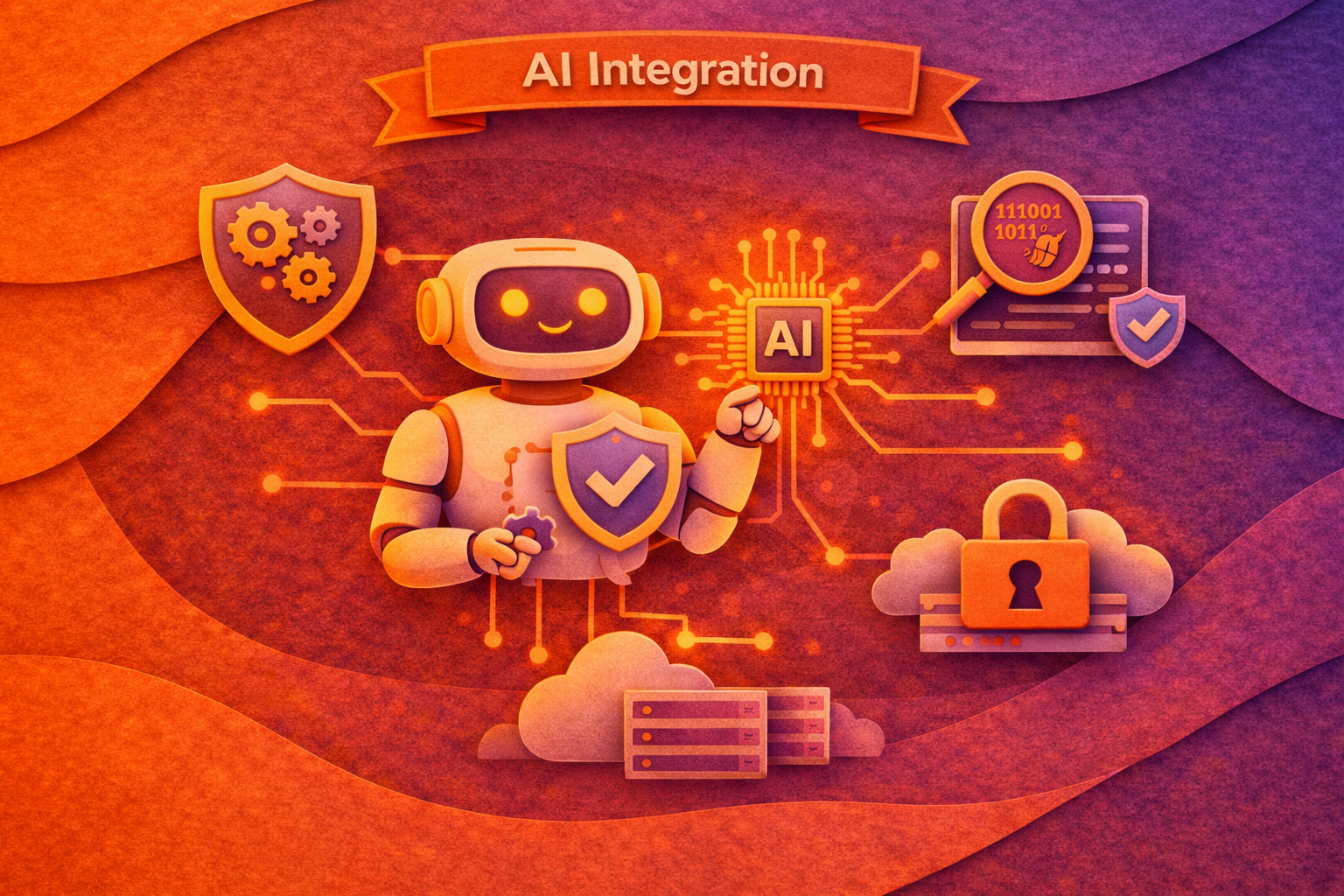
Integrating AI and Automation with Australian Standards
1. Essential Eight Alignment
How: Automate patch deployment (Strategy #2 or #3 in app/OS patching), track admin privileges with AI-based anomaly detection, or use AI-driven anti-malware tools.
Outcome: Closes high-risk gaps, ensuring mandated controls remain enforced.
2. Australian Privacy Principles (APPs)
How: Monitor personal data usage with AI, ensuring data flows remain consistent with privacy commitments. Automate encryption for stored and transmitted data.
Benefit: Rapidly detect unusual access or large data exports that could signal a privacy breach.
3. Local Incident Notification
What: Automated detection shortens breach discovery times, letting you notify the OAIC (Office of the Australian Information Commissioner) swiftly if personal data is compromised.
Why: Fulfilling local breach response obligations, minimising reputational fallout.
Best Practices for AI and Automation in Cybersecurity
1. Define Clear Objectives
Why: Align AI deployments with real problems - like detecting advanced threats or streamlining patch tasks.
How: Map pain points (alert overload, slow response times) to AI solutions, measuring success via reduced dwell times or fewer false positives.
2. Quality Data and Logging
Why: AI accuracy depends on robust, consistent logs or telemetry. Gaps degrade results or cause false positives.
How: Ensure endpoints, servers, cloud logs feed into a central platform. Normalise data to unify formats.
3. Start Small, Expand Gradually
Why: AI-based tools can be complex; rolling them out across entire networks at once might overwhelm staff.
How: Pilot on a limited set of endpoints or a smaller environment. Tune rules, gather feedback, and scale once stable.
4. Maintain Human Oversight
Why: Full automation can lead to risky decisions if AI misfires. Humans interpret context, verifying if a suspicious pattern is truly malicious.
How: Analysts or incident responders override or confirm automated actions, reviewing borderline alerts to refine models.
5. Evaluate Vendor Claims Carefully
Why: Many security vendors tout “AI-driven” or “machine learning,” but real capabilities vary.
How: Request demos, proof-of-concept trials, check references from Australian peers, or consult Managed IT Services for vendor-neutral advice.
Common Pitfalls
1. Overreliance on Automation
Problem: Believing AI alone solves all security woes, ignoring the need for staff training or strong policies.
Solution: Combine AI with robust incident response plans, regular staff training, and continuous oversight.
2. Data Quality Issues
Problem: Missing logs or inconsistent naming hamper machine learning accuracy.
Solution: Standardise logging across endpoints and networks. Ensure thorough coverage of cloud, on-prem, and remote logs.
3. Performance Overheads
Problem: Real-time analytics can be CPU-intensive, impacting system performance if not sized properly.
Solution: Scale hardware or leverage cloud-based analytics. Optimize ingestion rates, and consider partial or tiered data ingestion if budgets are tight.
4. Resistance from Security Teams
Problem: Some staff may distrust “black box” AI decisions or fear job displacement.
Solution: Involve teams early, highlight AI as augmenting human skills, not replacing them - leading to more interesting work, less grunt labour.
Tying AI and Automation into Broader Security
1. Vulnerability Management
What: Automated prioritisation of patch tasks, alerting if a known exploit emerges for certain vulnerabilities.
Why: Matches Australian emphasis on patching high-risk systems promptly, a core part of vulnerability management.
2. Data Encryption
What: AI-driven classification can flag sensitive data that must be encrypted or monitored for exfil attempts.
Why: Ensures compliance with local data privacy laws, especially the Australian Privacy Principles for personal data.
3. Incident Response
How: Automated runbooks triggered by suspicious patterns - like lateral movement attempts or mass file deletions - can quarantine hosts instantly.
Result: Faster containment, aligning with best-practice incident response plan timelines.
Role of a Managed IT Services Provider
A Managed IT Services partner can help by:
Selecting AI Solutions: Advising on SIEM, EDR, or orchestration platforms suitable for your environment and compliance obligations.
Integration Expertise: Configuring data feeds, normalising logs, and linking them to automation workflows that obey local Australian data residency or privacy constraints.
SOC or MDR Services: Providing skilled analysts who interpret AI alerts, refine detection models, and handle 24/7 incident coverage.
Ongoing Optimisation: Adjusting thresholds, removing false positives, and ensuring new threats or system expansions feed into AI processes.
Change Management: Supporting staff adoption, building trust in AI-based solutions, offering training and documentation.
For tips on selecting a partner adept in AI-driven security, see How to Choose a Managed IT Provider.
Measuring AI and Automation Success
Tie into Evaluating Managed IT Performance. Focus on:
Alert Reduction / Accuracy
Fewer false positives; more genuine threats flagged. A higher true positive vs. false positive ratio indicates good tuning.
Mean Time to Detect (MTTD)
Has AI-based anomaly detection shortened detection times for suspicious events?
Mean Time to Respond (MTTR)
Are automated steps or quick analyst escalations cutting response durations?
Employee Productivity
Freed from repetitive tasks, do security teams handle complex issues more effectively?
Coverage of Australian Standards
Is the environment maintaining alignment with the Essential Eight or privacy rules, aided by AI/automation tracking misconfigurations?

Why Partner with Zelrose IT?
At Zelrose IT, we see AI and automation as cornerstone enablers of efficient, adaptive cybersecurity - particularly for Australian organisations seeking to meet local guidelines. Our approach includes:
Tool Assessment and Integration: Selecting SIEM/EDR solutions that incorporate machine learning, ensuring seamless ingestion of logs and threat intel.
Custom Automation: Building workflows for patching, incident isolation, or user account locking, tailored to each client’s environment and maturity.
Continuous Tuning: Reviewing AI detection rules, removing false positives, refining to match your risk profile and typical traffic patterns.
24/7 Monitoring and SOC: Skilled analysts interpret AI-driven alerts, bridging the gap between automation and real-world nuance.
Local Compliance Alignment: Mapping automations and AI usage to Australian frameworks (Essential Eight) and privacy laws, so data usage remains secure and lawful.
Want to harness AI and automation for a more proactive, less burdensome security posture? Reach out - we’ll design, implement, and maintain solutions that keep your defences dynamic, efficient, and fully aligned with local needs.
AI and automation represent potent forces in cybersecurity, transforming how organisations detect, contain, and mitigate threats. By pairing advanced analytics (machine learning or deep learning models) with scripted response workflows, Australian businesses can identify stealthy intrusions faster, respond to suspicious events in real time, and lighten the load on overwhelmed security teams. Integrating these solutions with local compliance mandates - like the ACSC Essential Eight - ensures not only minimal risk but also alignment with Australia’s best-practice guidelines.
However, success with AI demands quality data, ongoing tuning, and staff skilled in interpreting or refining automated outcomes. Automation too must be approached cautiously - enhancing, rather than replacing, human expertise. For those seeking to accelerate adoption, a Managed IT Services provider can bring the necessary tools, knowledge, and around-the-clock coverage to safeguard your environment. Ultimately, embracing AI and automation ensures your cybersecurity strategy remains resilient in the face of ever-shifting threats.
Ready to adopt AI-driven defences for your Australian business?
Contact Zelrose IT. We’ll customise advanced detection, automated incident response, and seamless integration with local compliance - empowering you to stay one step ahead of evolving cyber threats.